
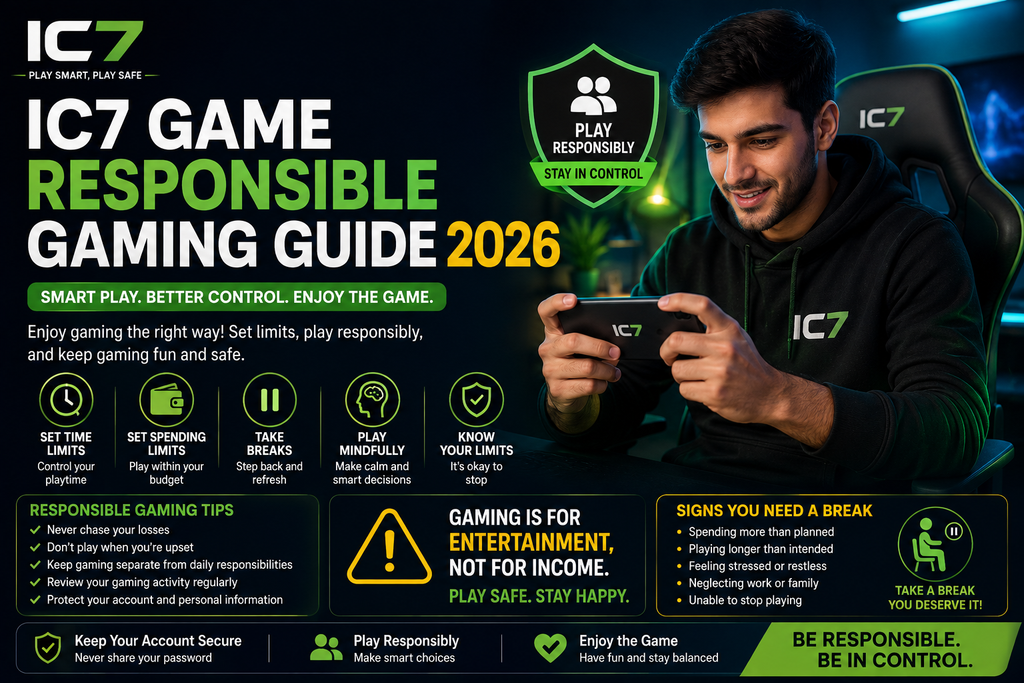
Online gaming should be approached as entertainment, not as a guaranteed way to make money. Setting personal limits, understanding the time you spend playing, and keeping track of your activity can help create a more balanced experience.
This IC7 Game Responsible Gaming Guide 2026 explains simple habits for managing gaming time, setting personal boundaries, monitoring activity, and making more informed decisions.
What Is Responsible Gaming?
Responsible gaming means maintaining control over how, when, and why you play.
It involves understanding that game outcomes can be unpredictable and that losses are possible. Instead of chasing losses or playing without limits, responsible players set boundaries and follow them.
A balanced approach can include:
- Setting a personal gaming budget
- Limiting playing time
- Taking regular breaks
- Avoiding emotional decisions
- Reviewing account activity
- Knowing when to stop
Responsible gaming is ultimately about maintaining control rather than trying to predict or guarantee results.
Set a Personal Gaming Budget
Before participating in any real-money gaming activity, decide how much you are comfortable spending.
Only use money that you can afford to lose after essential expenses have been covered. A gaming budget should never include money needed for rent, food, bills, education, savings, or other important responsibilities.
Once your personal limit has been reached, stop rather than adding more funds to continue.
Set Time Limits
Responsible gaming is not only about money. Time management is equally important.
Long sessions can make it easier to lose track of how much time has passed. Setting a specific amount of time before you begin can help maintain a healthier routine.
For example, you can decide in advance when your gaming session will end and take a break when that time arrives.
Using a phone or device timer can also help you monitor your session length.
Take Regular Breaks
Taking breaks gives you an opportunity to step away from the screen and reset.
During a break, consider doing something unrelated to gaming, such as:
- Walking
- Stretching
- Having a meal
- Talking with friends or family
- Reading
- Working on another activity
Regular breaks can also make it easier to recognize when you are becoming tired or losing focus.
Avoid Chasing Losses
One of the most important principles of responsible gaming is avoiding the urge to recover losses by immediately continuing to play.
A previous loss does not make a future result more likely to succeed. Each game or outcome should be treated independently.
If you lose an amount that reaches your predetermined limit, accept the result and stop for the session rather than increasing your spending in an attempt to recover it.
Do Not Play When Emotionally Upset
Your emotional state can influence decision-making.
If you are angry, frustrated, stressed, tired, or upset, taking a break may be a better choice than continuing to play.
Gaming should not be used as a way to deal with serious emotional or financial problems.
Returning to normal activities and making decisions later, when you are calm, can help you maintain better control.
Understand That Outcomes Are Uncertain
No strategy can guarantee a particular gaming outcome.
Previous results do not guarantee future results, and there is no reliable method that can eliminate the possibility of losing.
Avoid claims that suggest guaranteed profits, fixed winning systems, or certain outcomes. Treat promotional claims and gaming strategies critically and check the applicable terms before participating.
Review Your Gaming Activity
Keeping an eye on your activity can help you understand your own habits.
The IC7 Game account may provide activity or history information depending on the current platform features. Reviewing available records can help you monitor sessions and identify patterns.
Consider asking yourself:
- How often am I playing?
- How much time am I spending?
- Am I staying within my personal limits?
- Am I increasing my spending after losses?
- Is gaming affecting my daily responsibilities?
Honest answers can help you recognize whether your gaming habits remain balanced.
Keep Gaming Separate From Daily Responsibilities
Gaming should not interfere with important areas of everyday life.
Work, education, family responsibilities, sleep, exercise, and financial obligations should remain priorities.
If gaming begins to affect these areas, consider reducing your playing time or taking a longer break.
Creating a clear separation between entertainment and daily responsibilities can make it easier to maintain a balanced routine.
Avoid Borrowing Money for Gaming
Borrowing money to continue gaming can create unnecessary financial pressure.
Do not use loans, credit intended for essential expenses, or money borrowed from friends and family to fund gaming activity.
A responsible approach is to use only the amount you have already decided is suitable for entertainment and stop when that limit is reached.
Use Account Management Features Carefully
Account-management features can help users maintain control over their activity.
Where available, review options related to spending limits, session management, notifications, or account restrictions.
These features may vary depending on the platform, location, and current account setup. Always read the instructions and terms before activating a restriction or limit.
Protect Your Account Information
Responsible gaming also includes responsible account management.
Keep your login credentials private and avoid sharing passwords or verification codes with other people.
Use secure devices and avoid entering account details on unfamiliar websites or links.
If you notice unusual account activity, stop and use the platform’s official account-support or recovery process.
Recognize Warning Signs
Certain changes in gaming behavior may indicate that it is time to take a break.
Warning signs can include:
- Spending more than originally planned
- Playing longer than intended
- Trying to recover losses
- Hiding gaming activity from others
- Neglecting work or personal responsibilities
- Feeling stressed because of gaming
- Borrowing money to continue playing
- Finding it difficult to stop
If several of these signs apply to you, consider taking a break and seeking appropriate support from a trusted person or qualified professional.
Create a Simple Responsible Gaming Routine
A simple routine can make personal limits easier to follow.
Before playing, decide:
Budget: How much can I comfortably spend?
Time: How long will my session last?
Stopping point: When will I stop regardless of the result?
Break: When will I step away from the screen?
Having these decisions in place before starting can reduce the chance of making impulsive choices later.
Responsible Gaming for Mobile Users
Mobile devices make gaming accessible in many situations, so it can be particularly useful to establish clear boundaries.
Avoid gaming when you should be working, studying, driving, sleeping, or handling important responsibilities.
Device features such as screen-time controls, timers, and notification management can help you stay aware of how much time you are spending on your phone.
Know When to Take a Longer Break
A short break may not always be enough.
If you find yourself repeatedly exceeding your limits or thinking about gaming throughout the day, consider stepping away for a longer period.
Use the time to focus on hobbies, exercise, social activities, work, education, or other interests.
Taking a break does not mean you have failed. It can simply be a practical way to regain control over your routine.
Frequently Asked Questions
What does responsible gaming mean?
Responsible gaming means keeping control of your time, spending, and decisions while recognizing that gaming outcomes are uncertain.
Should I set a gaming budget?
Yes. If real-money gaming is available, establishing a personal budget before playing can help prevent unnecessary spending.
Can previous results predict future outcomes?
No. Previous results do not guarantee what will happen in a future game.
What should I do after a loss?
Accept the result and follow your predetermined limits. Avoid increasing your spending simply to try to recover a loss.
When should I take a break?
Take a break whenever you reach your time or spending limit, feel tired or emotional, or notice that gaming is interfering with your responsibilities.
Final Thoughts
Responsible gaming starts with simple decisions made before you begin. Setting realistic limits, taking regular breaks, avoiding loss-chasing, and monitoring your activity can help maintain a more balanced approach.
IC7 Game should be treated as entertainment rather than a guaranteed source of income. If gaming begins to affect your finances, relationships, work, education, or wellbeing, step away and seek appropriate support.
Always follow the applicable laws and age requirements in your location and use gaming services responsibly.